Ever noticed how some old streets still look good after years of people, cars and weather passing over them? The stones are not perfectly matched. The lines are not always straight. Yet somehow, the whole thing works.
That is the charm of choosing cobblestones for outdoors.
Today, they are not limited to old streets or traditional driveways. The same idea can work in a modern backyard, around a garden, through a courtyard or as a simple border around a paved area. The interesting part is that “cobblestone” does not mean just one type of stone.
So before choosing a cobblestone, it is worth looking beyond the colour. The type of stone, the format and the way it is laid can completely change the character of the space.
Cobblestones Are More Than One Type of Stone
Cobblestone usually refers to the format of the paving rather than one particular type of stone. This means a cobblestone can be made from different natural stones. Each material has its own colour, texture and surface character.
| What to compare |
What it changes |
| Stone material | Colour, texture and physical properties |
| Surface finish | Surface feel and overall look |
| Colour | How the paving works with its surroundings |
| Format | How the stones can be arranged |
| Pattern | The final visual effect |
This is why two cobblestone areas can look completely different even when they use the same basic paving format.
Which Cobblestone Material Suits Your Space?
The material you choose will affect how the finished space looks. Some stones have darker tones and a more solid look, while others are warmer in colour and a little softer in appearance.
At Stone Depot, cobblestones are available in granite, sandstone, limestone, bluestone and travertine. There are also different formats and styles to suit different spaces.
1. Granite Cobblestones for High-Use Areas
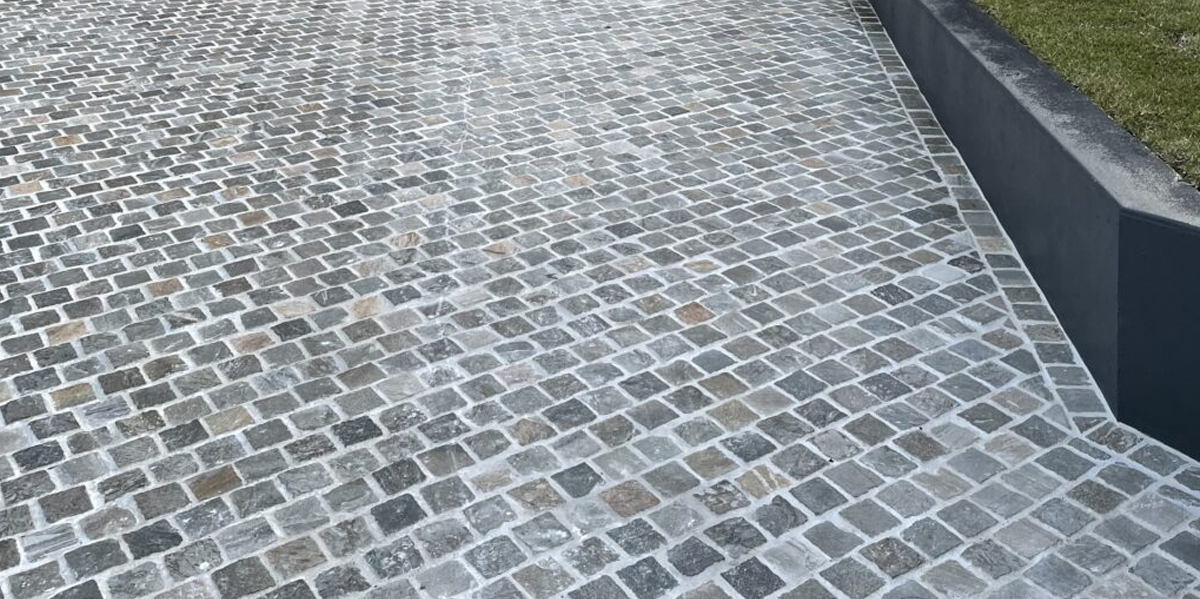
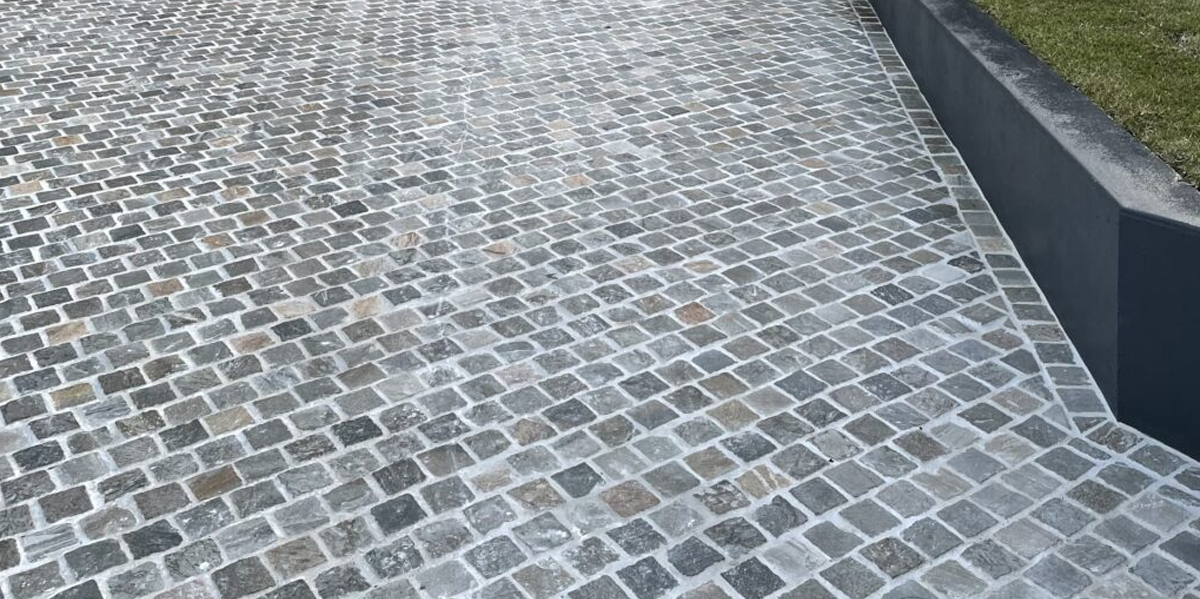
Granite has a dense structure and a solid appearance. It is available in grey, black and mixed tones. This can make granite cobblestones worth considering for areas that see regular use. Cobblestone pavers for driveways work well where the paving needs to suit the surrounding space while also handling regular vehicle use.
You can find different shades that include Mountain Black, Ocean Grey, Raven Black, Sesame Grey and Silver Grey granite cobblestones.
Bonus Tip: Darker tones can create a clear contrast against lighter walls, garden planting or other paving.
2. Sandstone Cobblestones for a Natural Garden Feel
Sandstone is known for its warm and earthy colours. Natural variation across the stone can give the surface a less uniform appearance. This can work well around garden beds, planting and timber. It may also suit paths where a softer outdoor look is preferred.
For Sandstone cobblestone, you can choose options such as Majra and Parla in mesh-backed formats.
3. Limestone Cobblestones for a Softer, Refined Look
Limestone often has a more subtle appearance, with soft and muted tones. It can suit courtyards, paths and other areas where the paving needs to blend with the wider design. A tumbled finish can soften the edges and give the stone a slightly aged appearance.
4. Cobblestones for a Contemporary Finish
Bluestone can bring darker gray and charcoal tones into an outdoor space. There may also be natural markings and color variation on some pieces. Stone Depot’s Kashmira Bluestone comes in gray tones with blue undertones in loose cobblestones. This will fit a simple, modern setting outside.
5. Marble and Travertine Cobblestones for Feature Areas
Marble and travertine offer lighter options for cobblestone paving.
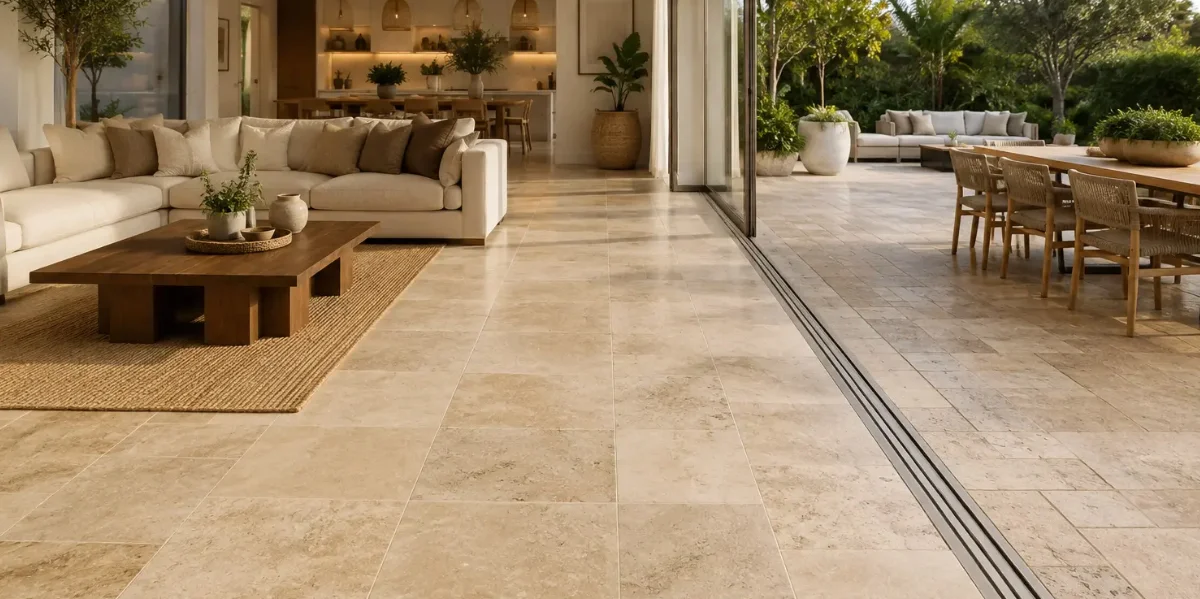
Travertine can have ivory, beige or silver tones with natural variation. Stone Depot offers Ivory and Silver Travertine as loose cobblestone options. Marble can also bring natural veining and colour movement. This can make it useful in areas where the stone itself is part of the visual focus.
A Quick Overview
| Material | Typical Visual Character | Design Direction |
| Granite | Grey, black and varied tones | Structured and defined |
| Sandstone | Warm and earthy | Relaxed and natural |
| Limestone | Soft and muted | Refined and simple |
| Bluestone | Dark grey to charcoal | Modern and clean |
| Marble or Travertine | Light with natural variation | Decorative and feature-led |
Disclaimer: The actual appearance can vary between products. It can also change depending on the finish and surrounding materials.
Loose or Mesh Back? The Format Matters Too
The way cobblestones are supplied can affect how they are laid and how much freedom there is with the layout. Here are some impactful natural stone cobblestone driveway ideas to make an informed decision.
Loose Cobblestones
These cobblestones come as individual pieces. This allows more flexibility when working around curves, edges and smaller areas. They can be useful where the layout needs to follow an unusual shape or where a less regular look is preferred.
Mesh Back Cobblestones
Mesh-backed cobblestones come arranged on sheets. This can help keep the pieces together and maintain a more consistent layout during installation. They can be useful for larger areas where a regular pattern is preferred.
One Stone, Different Looks: How Patterns Change the Result
The layout can change the way cobblestones look across a space.
A straight arrangement can feel neat and ordered. Herringbone brings more movement while a fan pattern can work well around curved areas. Cobblestones can also be used as a border instead of covering the entire surface. A simple change in layout can give the same stone a very different appearance.
| Pattern | Visual Effect | Where to try it |
| Straight or grid | Neat and ordered | Paths and courtyards |
| Herringbone | Repeating movement | Driveways and feature areas |
| Fan | Curved and decorative | Entrances |
| Contrasting border | Creates a clear frame | Driveways and garden edges |
How to Choose Cobblestones for Driveways & Other
Driveways may be one of the more common uses for cobblestones but they are not the only option. You can place cobblestone pavers for outdoor areas to give a more cohesive vibe.
Driveways That Feel More Considered
Cobblestones can add texture to a driveway without relying on one large, paved surface.
They can also be used around the edges as a border or detail. This can help define the entrance and create a clear transition between the driveway and garden. For vehicle areas, the selected stone and installation system should suit the expected use. Product specifications are worth checking before making a final choice.
Garden Paths with a Natural Flow
The smaller size of cobblestones can work well along garden paths.
Loose pieces can be arranged around curves and planting areas. The choice of stone can also change the feel of the path. Warm sandstone can sit comfortably with garden planting while darker bluestone can create stronger contrast.
Courtyards That Feel Like Their Own Space
Cobblestones can help give a courtyard its own visual identity.
Using the same stone and pattern can help the area feel like part of the garden rather than a separate section. Lighter stones can keep the space feeling open, while darker shades give the edges a little more definition.
Which Cobblestone Should You Choose? A Practical Decision Table
| Your project | What to Consider | What to Explore |
| Vehicle driveway | Traffic and installation system | Granite options |
| Curved garden path | Flexibility and texture | Loose cobblestones |
| Formal courtyard | Consistent appearance | Limestone or lighter stones |
| Contemporary entrance | Dark tones and contrast | Bluestone or dark granite |
| Warm garden setting | Earthy colour and texture | Sandstone |
| Decorative border | Scale and contrast | Smaller cobbles |
What to Check Before Ordering Cobblestones
A few details are worth looking at before settling on a product.
- Intended use and expected traffic
- using a product that is suitable for the surface.
- Stone type, size and thickness
- Surface finish and colour
- Loose or mesh-backed format
- Base and drainage requirements
- Jointing and installation method
The Right Cobblestones Do More Than Fill a Surface
Cobblestones can add useful detail to an outdoor area without becoming the main feature.
In this guide to cobblestone pavers, you have covered how material affects the colour and character. The finish changes the surface feel while the format and pattern affect how the paving comes together. Dark granite may suit a structured driveway. Warm sandstone can work nicely beside garden planting. Lighter travertine may be worth exploring a relaxed courtyard.
FAQs
- Are cobblestones good for driveways?
- What is the best stone for cobblestones?
- What are mesh-backed cobblestones?
- How do I lay cobblestones?
- Begin with a flat smooth surface
- A firm foundation under the stones
- Lay the cobbles in your preferred pattern
- Even leave gaps between the parts
- Finish by plugging the gaps in to secure the stones
- How to choose the right cobblestones?
They can work well for driveways and handle heavy vehicle traffic. Granite cobblestones are one option to look at for this type of use.
It depends on where you are using them. Granite suits a stronger, darker look, while sandstone has warmer tones. Limestone and bluestone give you a few more options to work with.
The small cobblestones are already joined to a mesh sheet. So instead of placing every piece separately, the stones stay together. This can be handy when covering a larger area.
The exact steps will depend on the area, type of stone and installation method.
Start with where you plan to use them. Then look at the stone type, colour, format and pattern to find an option that suits the space.
*Disclaimer: All information and advice given above in the blog are to the best of our knowledge. Please reconfirm at your end before execution.