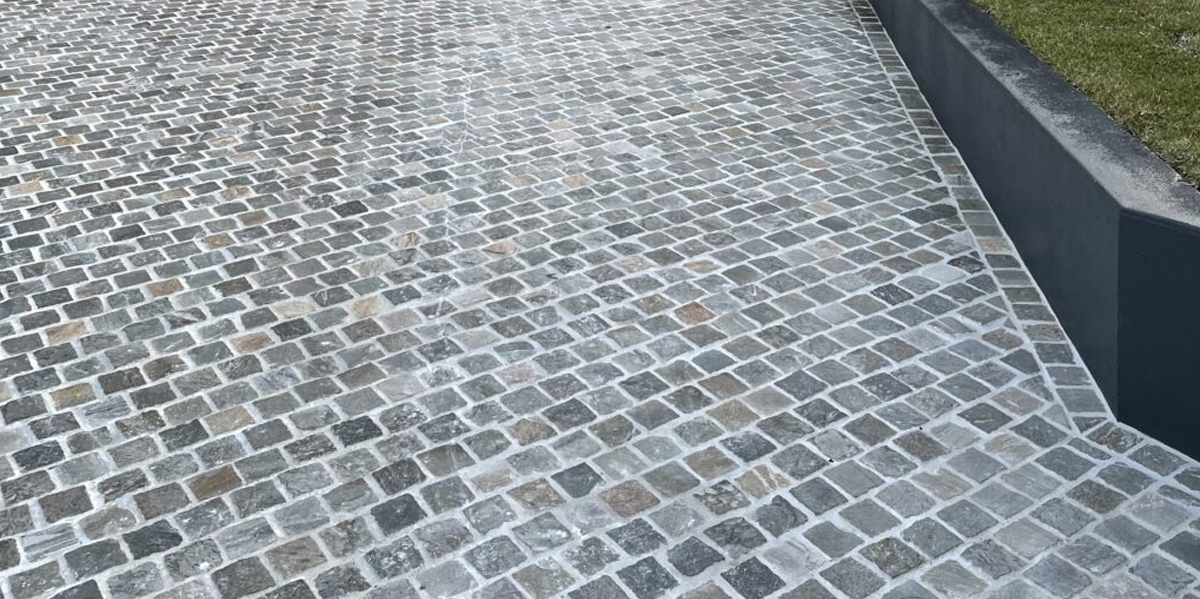
Key Takeaways
- Sweep away leaves, dirt and loose debris first.
- Clean stains, moss and algae with a suitable stone cleaner.
- Check pavers for cracks, chips or movement.
- Look over joints and edges for gaps or weeds.
- Let the stone dry before checking if it needs resealing.
- Use stone-safe products to avoid damaging the surface.
The first light warm days of spring often bring outdoor spaces back into use. Patio furniture comes out, garden paths see more foot traffic and outdoor areas start feeling useful again. Before all that happens, it may be worth giving the natural stone a quick clean-up.
After winter, stone can hold onto more than just a layer of dirt. Leaves may have collected in the corners. Moisture may have left dark patches. Moss or algae may have appeared in shaded areas. In some cases, pavers or joints may also need a closer look.
The good news is that spring maintenance does not have to become a major cleaning project. A basic clean followed by a simple inspection can show what needs attention and what can be left as it is. This makes spring a useful time to bring outdoor stone back into shape before the warmer months begin.
What Winter Can Leave Behind on Natural Stone?
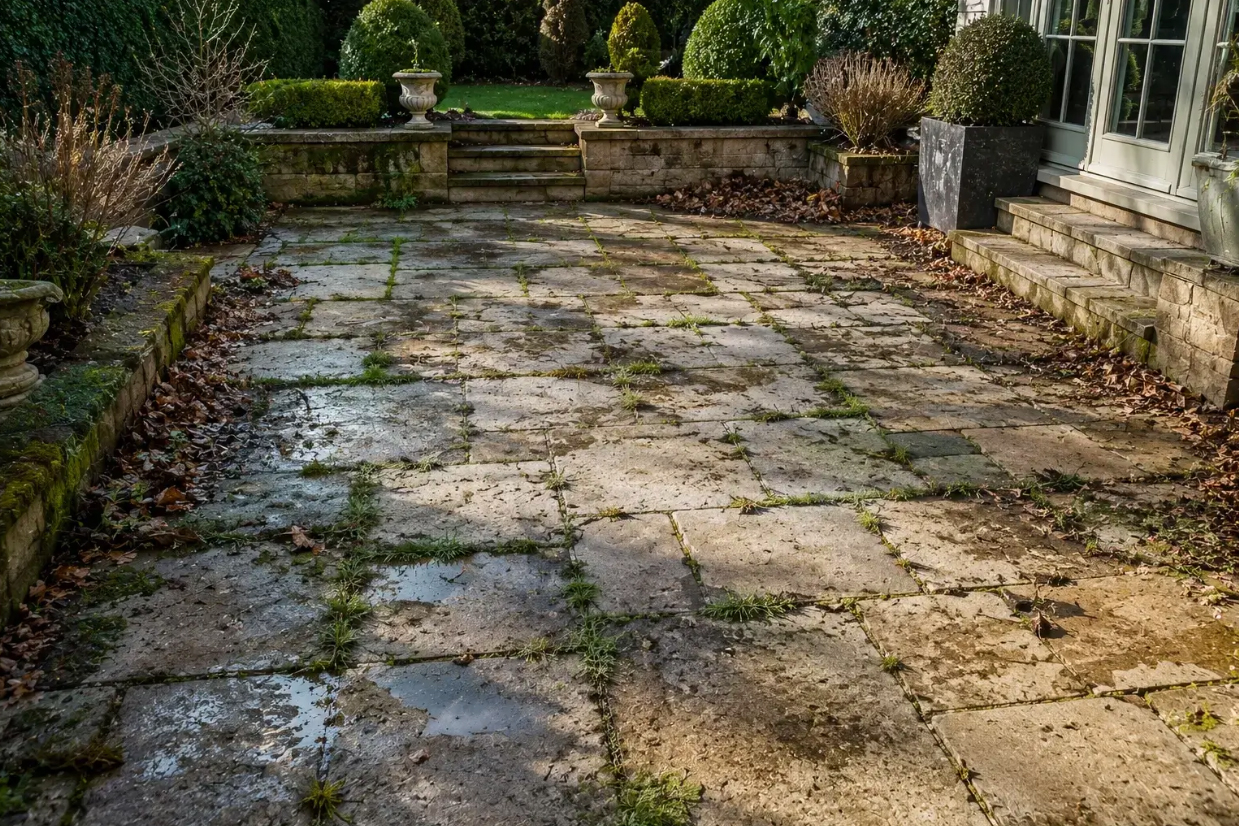
Natural stone stays exposed to the weather throughout winter. Rain, moisture, dirt and fallen leaves can slowly build up on the surface. Areas that receive less sunlight may also stay damp for longer, which can encourage moss or algae.
Some signs are easy to spot; others may only become clear once the surface has been cleaned. For example, a patio can look fairly clean from a distance while still having dirt trapped around the joints or dark marks under outdoor furniture.
Common Post-Winter Checks
| What can be left behind |
Where it is often noticed |
| Dirt and mud | High-traffic areas and entry points |
| Leaves and plant matter | Corners, edges and joints |
| Moss and algae | Damp and shaded areas |
| Water marks | Areas exposed to regular rain |
| Weeds | Gaps between pavers |
| Stains | Under furniture, pots or near dining areas |
Start With a Basic Natural Stone Clean
A clean surface gives a better idea of how the stone is actually looking. It can also help separate simple surface dirt from marks or issues that need further attention. For most outdoor areas, the process can begin with a gentle sweep.
Loose leaves, dust and small pieces of garden waste can be removed before any cleaner is used. A suitable natural stone cleaner may then be used where needed. The right product can depend on the type of stone and its finish, so checking the product instructions is worthwhile.
A simple approach may look like this:
- Clear the surface of leaves and loose debris.
- Sweep the stone with a soft broom.
- Use a suitable cleaner on areas that need deeper cleaning.
- Clean gently without using excessive force.
- Allow the surface to dry before checking its final appearance.
A quick sweep may be all that is needed in some areas. Places with built-up dirt or stains may need a little more cleaning. This approach can work well for spring cleaning natural stone, stone patios and outdoor pavers. It also gives the surface a fresh starting point before the maintenance check begins.
What to Look for After Winter
Once the stone is clean and dry, the next step is to look a little closer. This is where basic natural stone maintenance becomes more useful. A short walk around the space can reveal changes that were hidden under dirt. The pavers themselves are a good place to start. Cracks, chips or uneven pieces may stand out more clearly after cleaning. A paver that moves slightly underfoot may also suggest that it has shifted.
The joints deserve attention too. Weeds, gaps and missing joint material can appear after months of rain and regular weather exposure. Edges around garden beds and steps can also collect moisture and debris.
A few areas may be worth checking more closely:
- Surface for cracks, chips, stains or unusual marks
- Pavers for movement, sinking or uneven areas
- Joints for weeds, gaps or worn material
- Edges for damage or loose sections
- Low areas before checking its final appearance.
These checks are not meant to turn every small mark into a repair job. They are simply a way to understand the condition of the stone before space starts getting more use.
Should You Seal or Reseal Natural Stone in Spring?
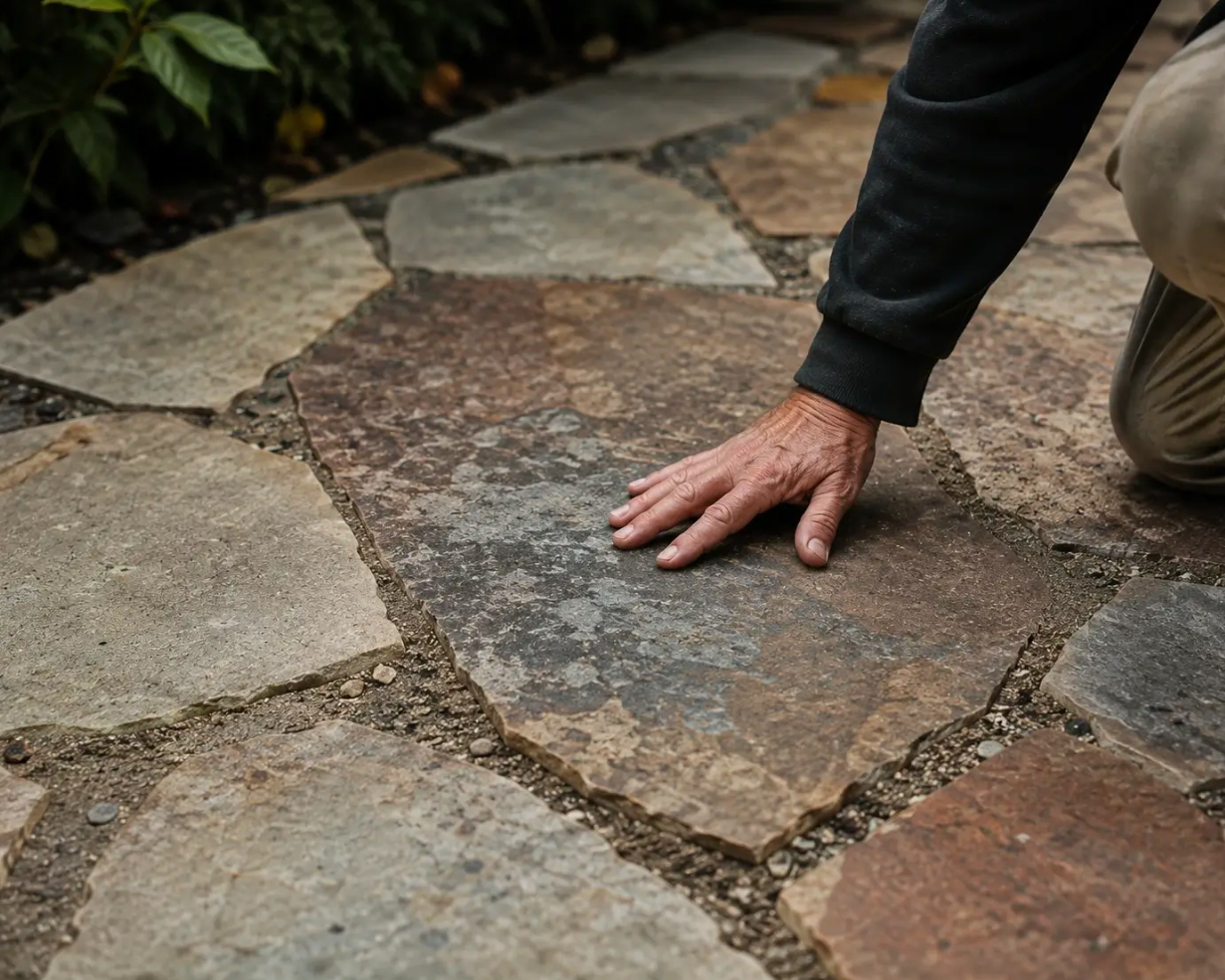
Spring is often seen as the perfect time for resealing. However, natural stones do not automatically need a new coat of sealer every year.
The need for resealing can depend on several things. The type of stone matters, as does its finish, location and level of use. A patio that gets regular foot traffic may need different care from a lightly used garden path.
The condition of the existing sealer can also give some useful clues. If the surface seems to absorb moisture much faster than it once did, it may be worth checking whether the protective coating has worn down.
When to Check or Wait on Resealing
| Consider checking the sealer when |
It may be better to wait when |
| The existing sealer appears worn | The surface has not been cleaned yet |
| Water absorbs into the stone quickly | The stone is still damp |
| The stone is exposed to regular use | The existing protection still appears sound |
| The product guidance suggests resealing | There is no clear need for another coat |
Trivia: Should natural stone be sealed or resealed in spring?
It can be, but only when the stone needs it. Spring is a good time to assess the condition of the surface rather than treating resealing as an automatic seasonal task.
Choosing the Right Cleaner and What to Avoid
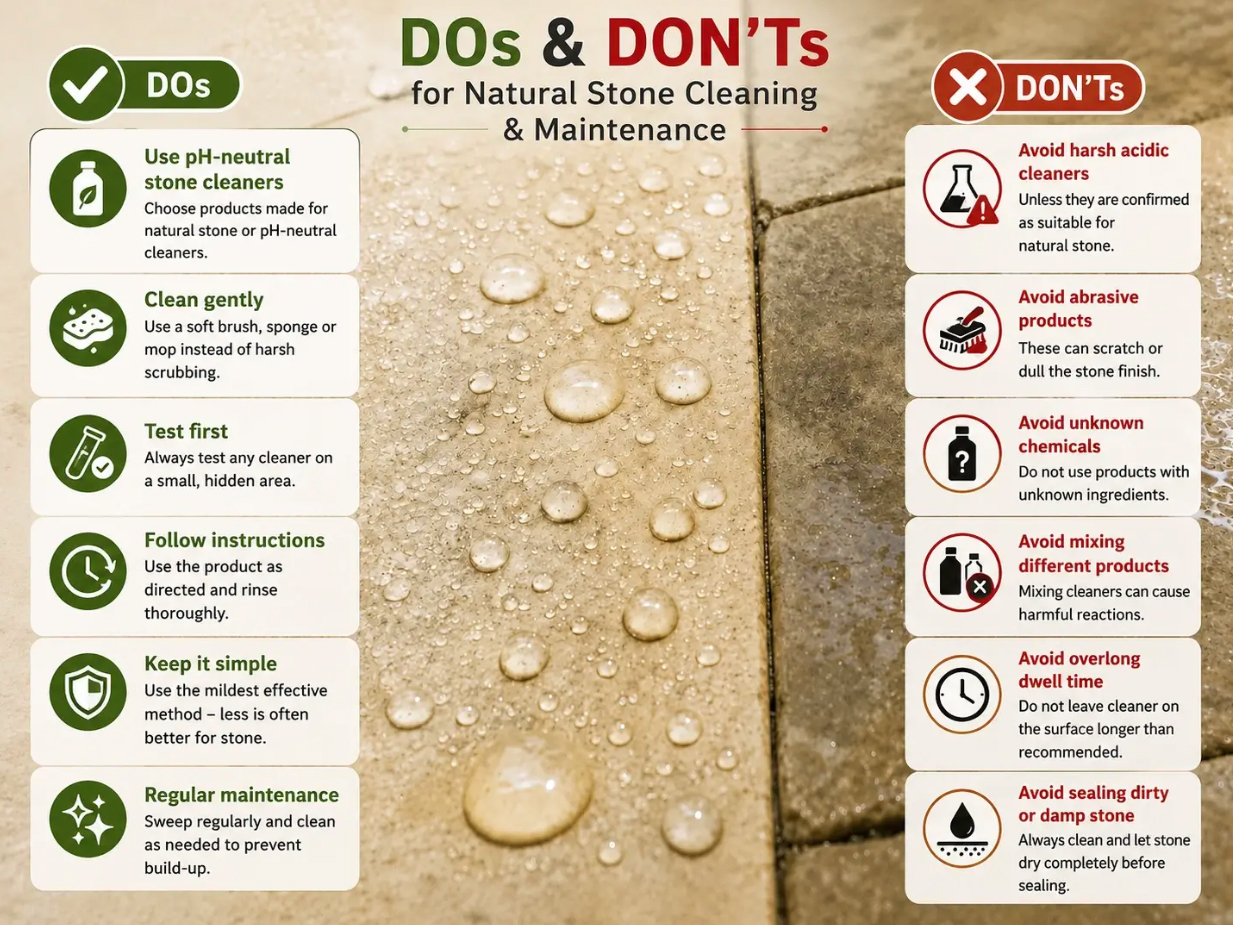
Choosing the right product is an important part of natural stone cleaning and maintenance. Natural stone is not the same as every other outdoor surface, so a strong household cleaner may not always be suitable. A cleaner made specifically for natural stone can be a sensible starting point. Where suitable, a pH-neutral cleaner may also work well for regular care.
It is worth checking the label before using any product. If there is any doubt, testing it on a small hidden section can help show how the stone reacts. The cleaning method matters too. A gentle clean is often preferable to heavy scrubbing. There is also little benefit in using a stronger product simply because a mark looks stubborn.
Things That are Better Avoided
- Harsh acidic cleaners unless they are confirmed as suitable
- Abrasive products that may affect the stone finish
- Unknown chemicals
- Mixing different cleaning products
- Leaving cleaner on the surface longer than recommended
- Sealing stone that is dirty or still damp
Good spring stone maintenance is often about using the simplest suitable method rather than doing more than the stone needs.
A Simple Yet Impactful Stone Maintenance Checklist
Once the main cleaning is finished, the rest of the spring maintenance can be kept fairly simple. The following list brings the main tasks together in one place.
- Remove winter debris such as leaves, dirt and loose garden waste.
- Clean the stone using a product that is suitable for the surface.
- Check for organic growth such as moss and algae.
- Look between pavers for weeds, gaps or worn joints.
- Inspect the surface for cracks, chips or stains.
- Check for movement in individual pavers.
- Look around edges near steps, garden beds and borders.
- Notice water pooling in areas that do not dry well.
- Assess the sealer if the surface appears less protected than before.
- Allow the stone to dry before deciding if further treatment is needed.
This simple spring maintenance checklist covers the main areas without making the job feel bigger than it needs to be.
Preparing Natural Stone for the Warmer Months

With winter dirt cleared and the stone checked, the outdoor space is ready for more regular use. A quick sweep now and then can help keep leaves and loose dirt from building up. It may also be worth watching areas that stay damp or collect debris. Beyond that, regular care can stay simple. The goal is not to spend time constantly cleaning the stone. It is simply about keeping it looking good and ready for the warmer months.
FAQs
- What natural stone maintenance should I do in spring?
- How do I spring clean natural stone pavers?
- What should I clean and inspect on my natural stone after winter?
Start with a good sweep and remove leaves, dirt and any weeds. It is also a good time to check for cracks, stains, loose pavers or worn joints.
Sweep the surface first, then wash it with clean water and a pH-neutral stone cleaner. A soft brush can help with dirt that has been built over winter.
Look for dirt, moss, weeds, stains and water marks. It is also worth checking for cracks, movement, damaged edges and loose or worn joints.
*Disclaimer: All information and advice given above in the blog are to the best of our knowledge. Please reconfirm at your end before execution.