Most of us treat winter warmth as a battle you win with a bigger heater. Crank the thermostat, close the curtains, hope for the best. But if you've ever noticed a room that's warm from the couch and freezing by the door or a fireplace that goes cold the second the flames do, the problem was never the heater.
There are real, well-understood benefits of natural stone in winter that most people never hear about because most winter advice stops at cushions and candles. Here are five real, physics-backed ways natural stone helps keep an Australian home warm, each tied to an actual problem that makes a room feel cold in the first place.
1. The Problem: "My Heater's Been on for an Hour and the Room Still Feels Cold"
This usually isn't a heater problem; it's a materials problem. Lightweight surfaces heat up fast and cool down just as fast, so the moment your heating cycles off, the warmth disappears with it. That's why a room can feel warm in the moment but never actually holds onto it.
The Solution
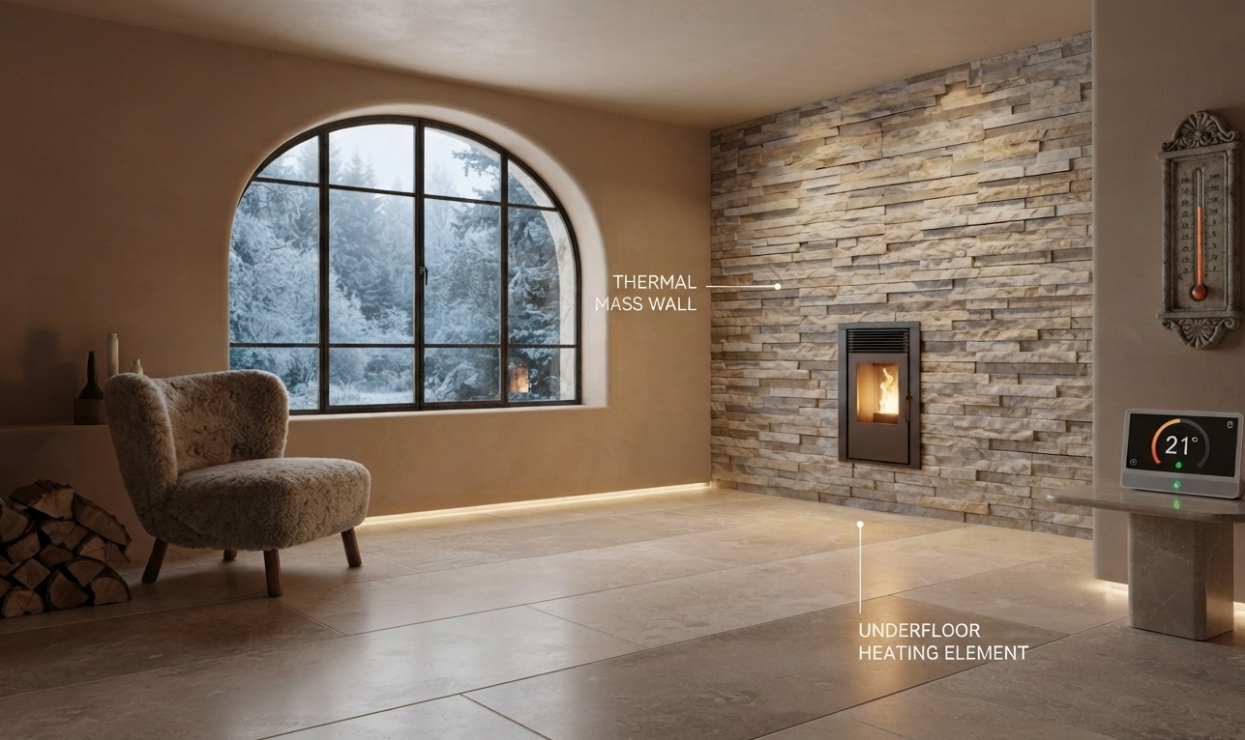
This is exactly how natural stone keeps home warm in a way most materials can't: through high thermal mass, the ability to absorb a large amount of heat and release it slowly over time rather than losing it the second the source is gone. It's the same property that keeps old stone cellars and caves at a stable temperature year-round, no matter how much the outside air swings.
How This Helps in Practice
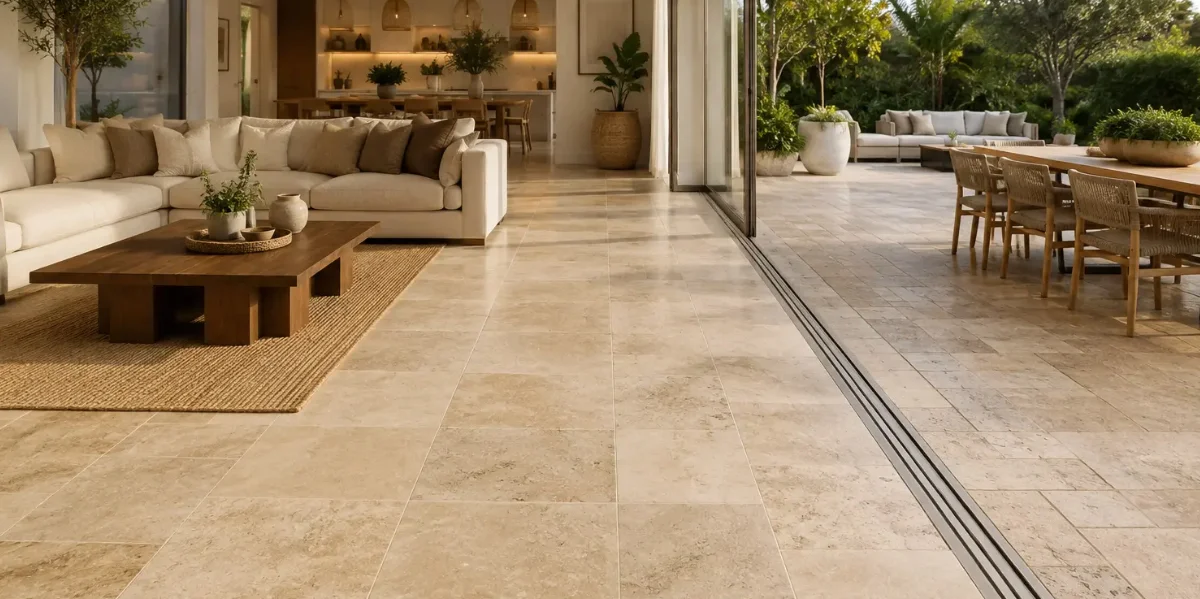
Natural stone flooring paired with underfloor heating absorbs warmth from the system evenly across the whole surface, then keeps releasing it for hours after the heating switches off, a genuinely different experience to carpet, which insulates against the heat ever properly reaching the room in the first place. If a room "just won't stay warm" no matter how long the heater runs, the flooring material is very often the missing half of the equation.
2. The Problem: "The Room Goes Cold the Second the Fire Dies Down"
If you've got a fireplace, you've probably felt this: brilliant heat while the fire's roaring, then a rapid slide back to cold within the hour. That drop-off is usually about what surrounds the fire, not the fire itself.
The Solution
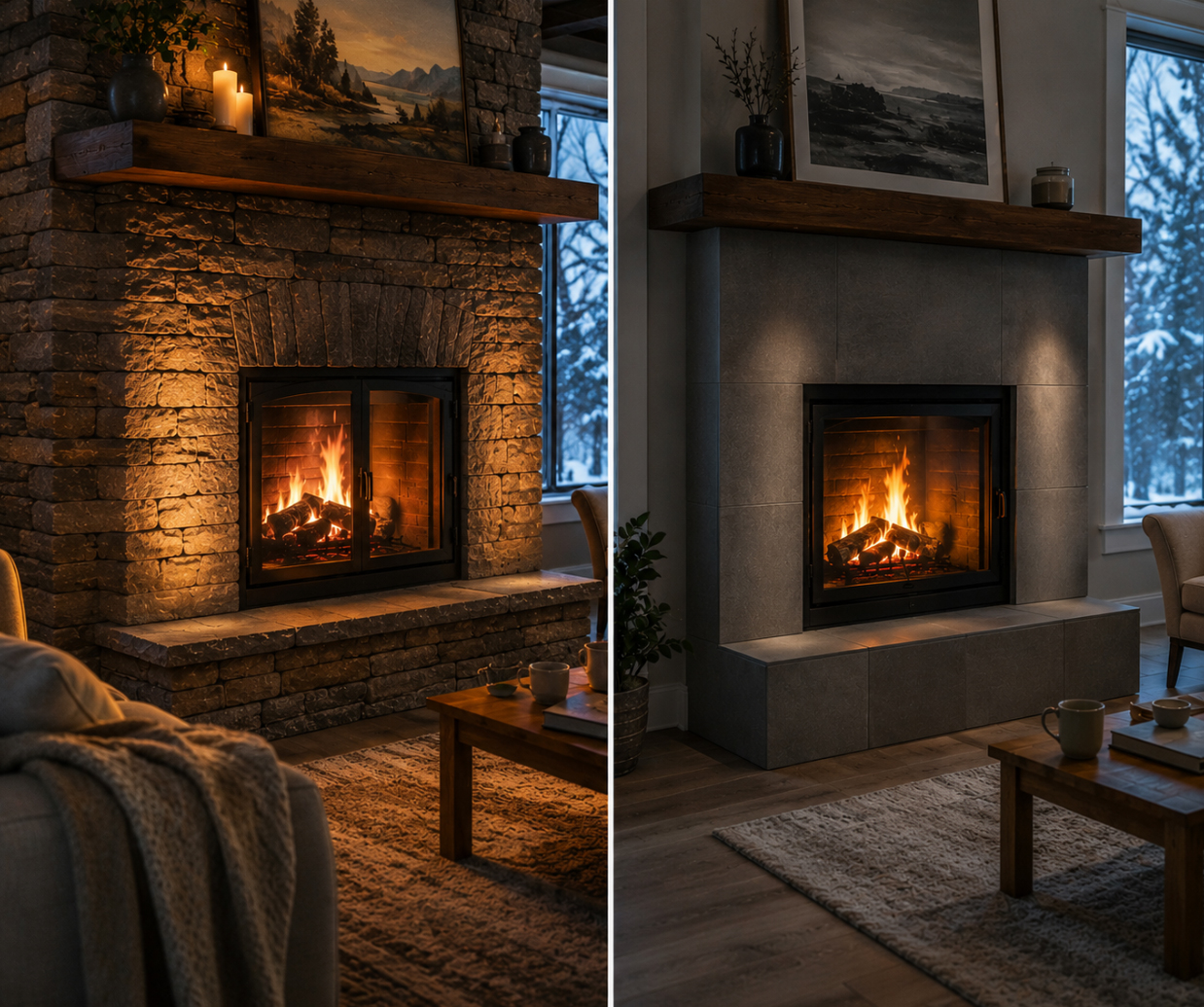
This is exactly where stone fireplace heat retention comes in as a genuine, practical fix rather than just a nice-to-have. A stone surround absorbs radiant heat from the fire while it's burning, then continues releasing that stored warmth into the room for hours afterward instead of a metal or tiled surround, which heats up quickly but sheds that heat almost as fast once the flames die down.
How This Helps in Practice
If your current fireplace runs hot then cold fast, cladding the surround in a dense natural stone extends the "warm window" of the room significantly, without changing anything about the fire itself.
3. The Problem: "Some Rooms Feel Drafty Even with the Heater Running"
This is almost always a wall problem, not an air problem - thin, bare walls lose heat constantly, radiating cold back into the room no matter how warm the air gets. It's part of why heating can feel like it's "not working" in certain rooms specifically, usually ones with more exposed exterior walls.
The Solution
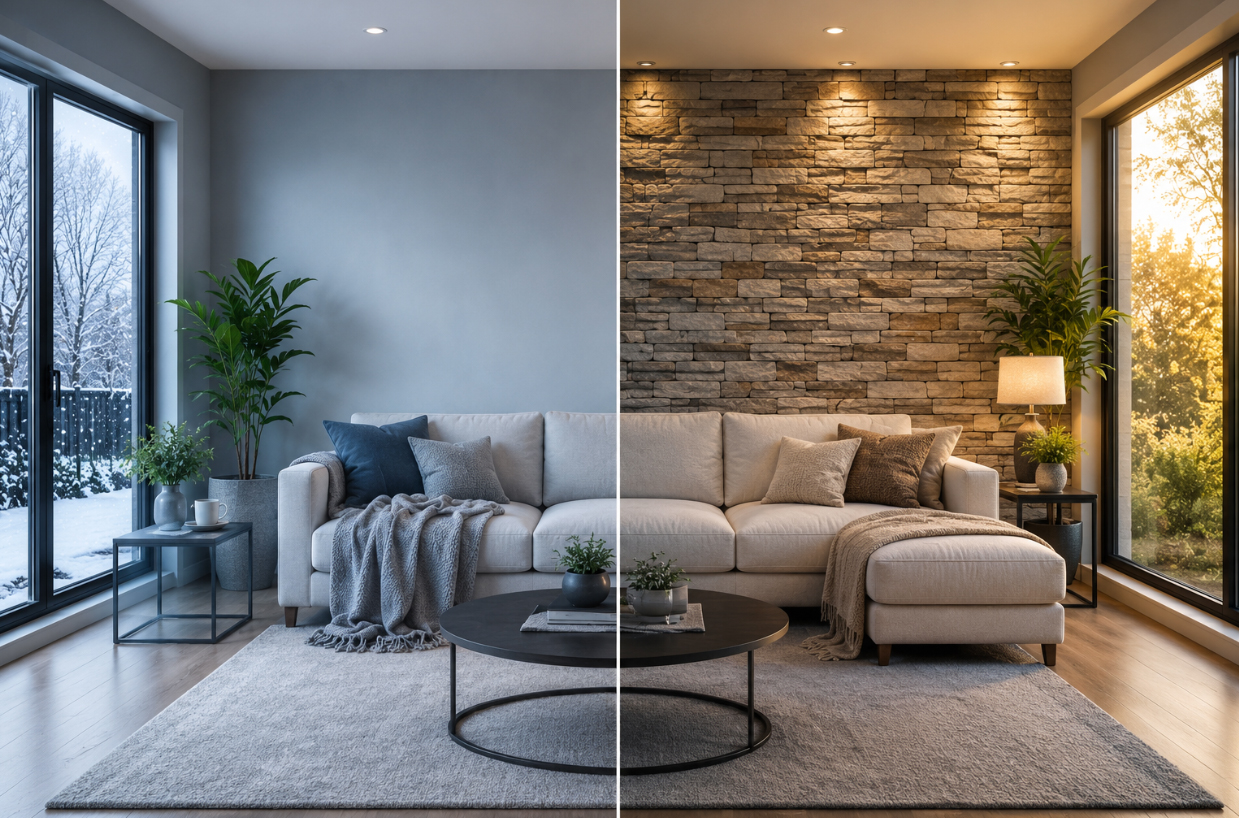
Interior stone cladding solves this the same way stone flooring solves the cold-floor problem: it adds real thermal mass to a wall, so instead of just reflecting cold back into the room, it absorbs ambient warmth during the day and slowly gives it back overnight. This is genuine winter warmth with stone walls, not just a styling choice, the material is actively buffering the temperature swings a typical Australian home goes through in a single day.
How This Helps in Practice
If a specific room consistently runs colder than the rest of the house, a stacked stone or split-face feature wall on the coldest exterior-facing wall is a targeted, practical fix rather than just turning the heater up and hoping.
4. The Problem: "The House Feels Stuffy and Still Cold, Even with Everything Sealed Up"
A lot of Australian homes go into "winter lockdown" mode - curtains shut, doors closed, heater running most of the day and still end up feeling both stuffy and cold at once. Part of the issue is that most materials in a sealed-up home don't do anything useful with the free heat available to them, namely the sun.
The Solution
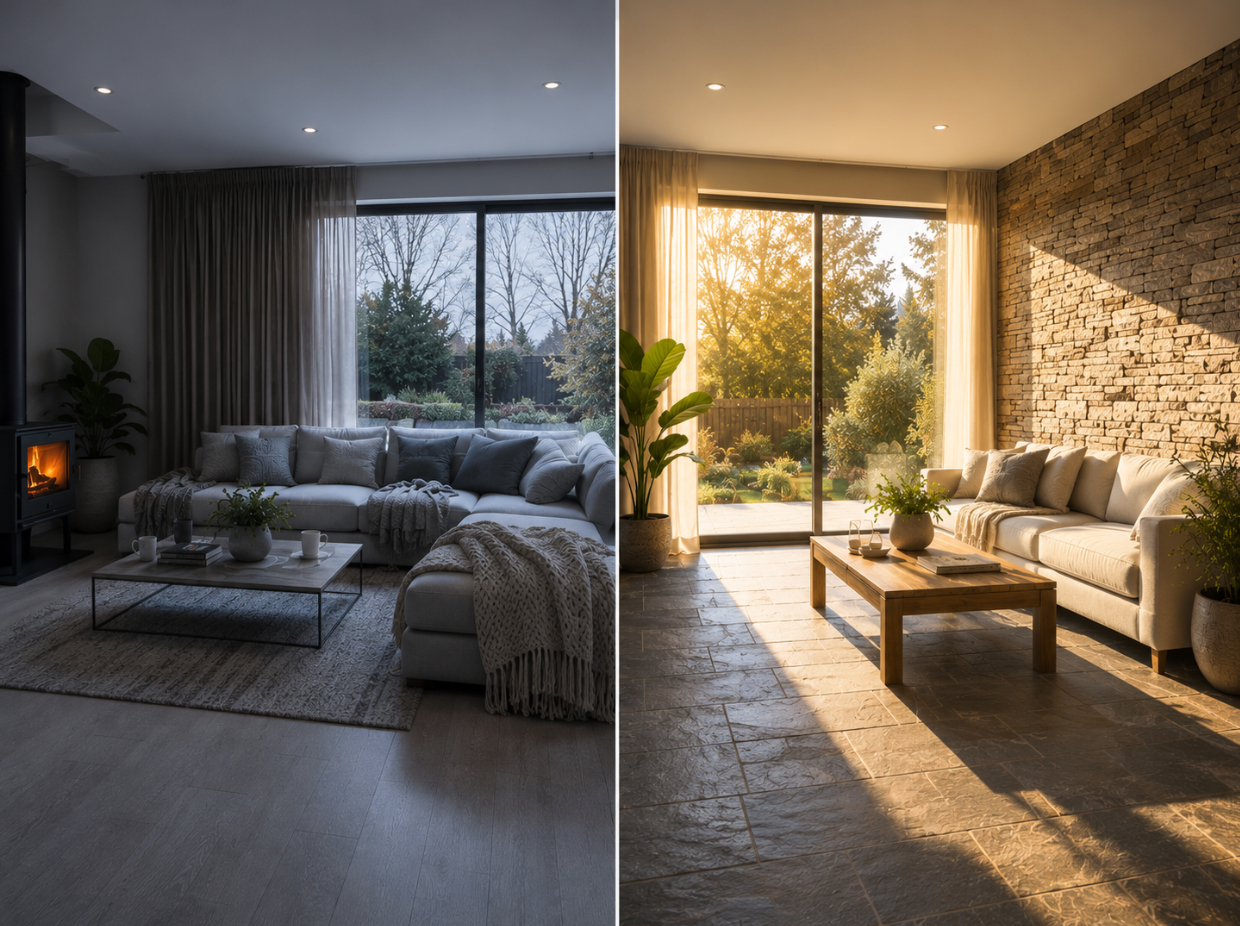
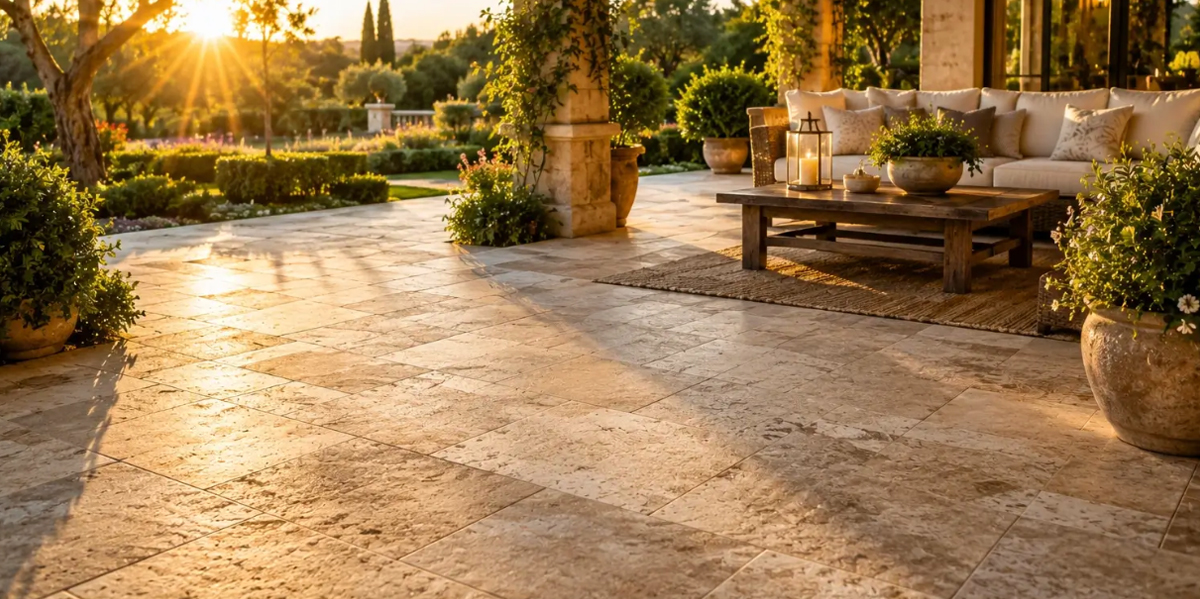
This is one of the more overlooked benefits of natural stone in winter: its thermal mass works just as well with passive solar warmth as it does with a heater. A stone floor or feature wall positioned to catch winter sun through a north-facing window will quietly absorb that free heat through the day and release it back into the room once the sun's gone reducing how hard your heater has to work in the evening, and easing that closed-up, stuffy feeling that comes from relying on artificial heating alone.
How This Helps in Practice
If a living area gets decent winter sun through the day but still feels cold and flat by evening, natural stone flooring or cladding in that sun-exposed zone helps capture and hold onto warmth you're currently letting go to waste.
5. The Problem: "Will This Material Actually Hold Up, Winter After Winter?"
This is less about a single cold night and more about a longer-term worry, especially for anyone renovating: will the material you choose now still be doing its job in five, ten, twenty years or will it crack, warp or degrade with each seasonal temperature swing?
The Solution
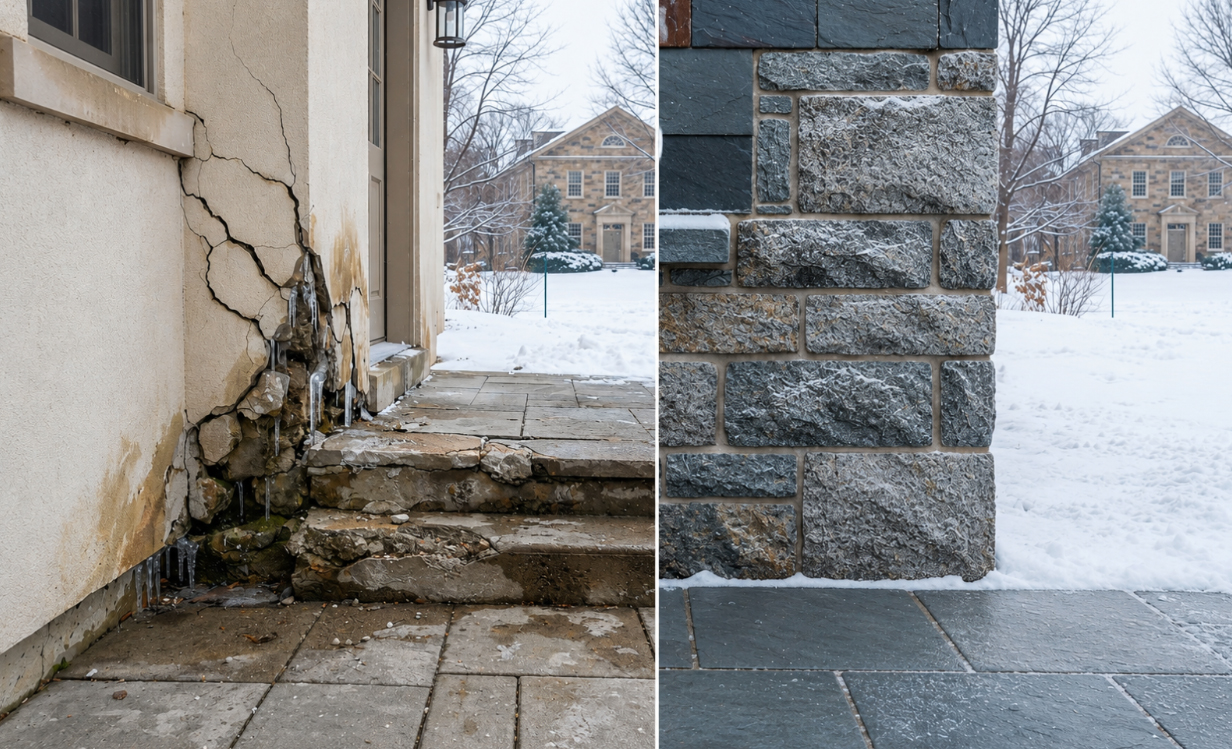
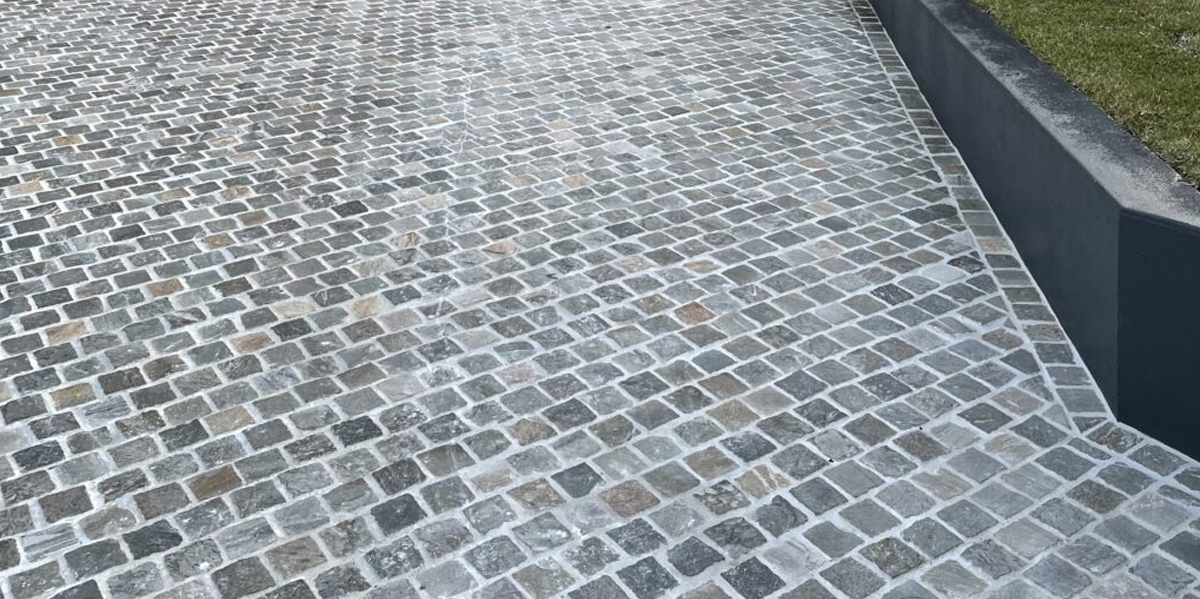
This is where natural stone in cold weather genuinely earns its reputation. Dense stones like granite, bluestone and slate are built to handle repeated heating and cooling cycles without losing structural integrity which is part of why so many genuinely old stone buildings are still standing after centuries of exactly this kind of stress.
How This Helps in Practice
If you're choosing between materials for a long-term renovation, this is the difference between something that needs replacing or repairing after a few tough winters and something that just keeps performing, season after season, without you having to think about it again.
The Real Takeaway
Every one of these problems; the room that won't hold heat, the fireplace that goes cold fast, the draft that won't go away, the stuffy-but-still-cold house, the material that might not last comes back to the same root cause: most homes rely entirely on the heater and ask nothing of the materials around it. Natural stone is one of the few materials that shares the load, through thermal mass, heat retention, passive solar gain and genuine durability through repeated seasonal change.
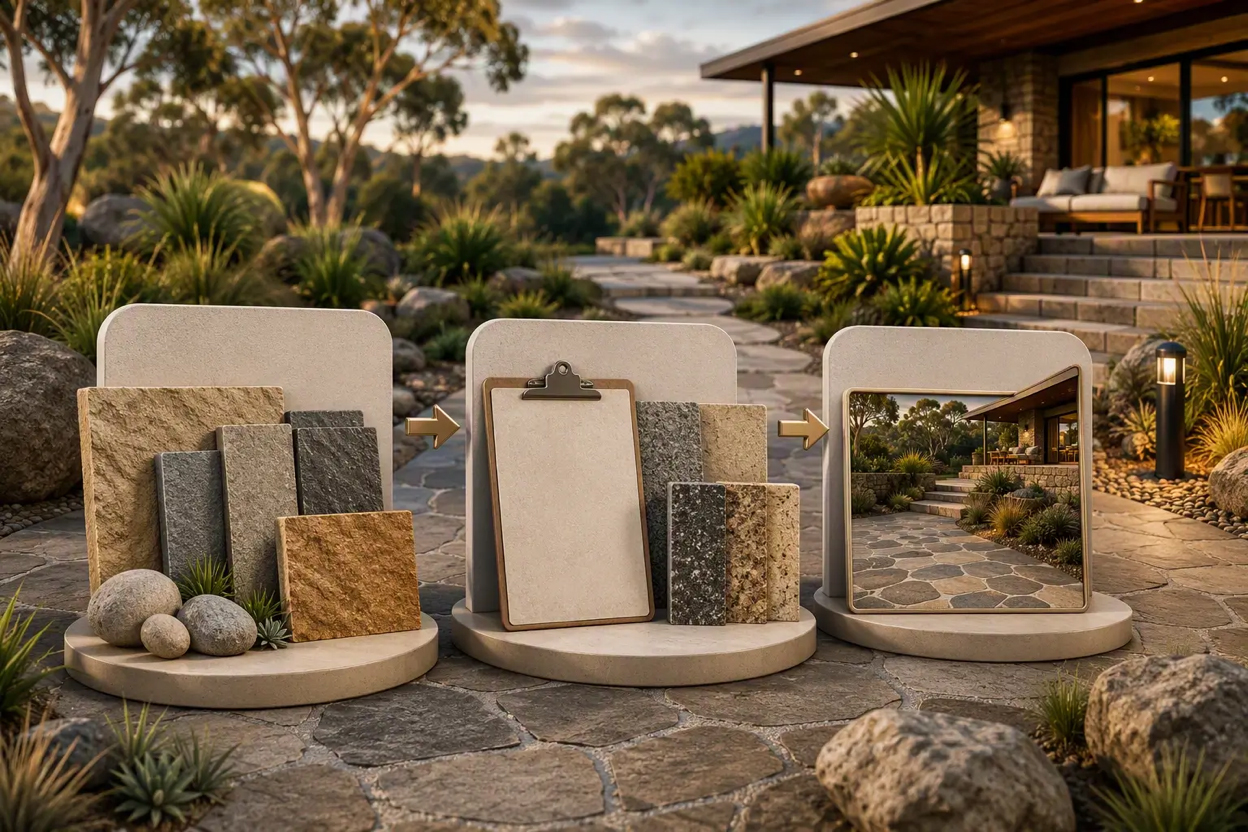
If one of these problems sounds exactly like your place, it's worth looking at what's under your feet and around your fireplace before you just turn the heater up again. Stone Depot’s range of natural stone flooring and interior stone cladding is a good place to start. Grab a free sample and feel the difference for yourself.
Frequently Asked Questions
- How does natural stone keep a room warm without extra heating?
- What's the best stone for a fireplace surround that stays warm longer?
- Will natural stone crack or wear out from repeated winter heating and cooling?
- Does a natural stone fireplace add value to a home?
Through thermal mass as it absorbs heat slowly and releases it slowly, so it keeps radiating warmth long after the heat source is gone.
Any dense natural stone over metal or tile as stone holds and releases heat gradually, while metal and tile cool almost as fast as they heat up.
No, dense stones like granite, bluestone and slate are built to handle those temperature swings for decades without issue.
Both works as cladding a feature wall or fireplace is easy to retrofit; stone flooring with underfloor heating is best planned into a new build or major reno.
*Disclaimer: All information and advice given above in the blog are to the best of our knowledge. Please reconfirm at your end before execution.