Key Takeaways
- Things like lemon juice or wine can stain the surface in just a few minutes.
- Sealers are a vital shield for natural stones, so you need to test them from time to time.
- Regular household cleaners are actually too harsh for natural stones.
- Dirt and sand from outside are the main reasons floor tiles lose their shine.
Do You Know?
Common "natural" cleaners like vinegar, cleaning acids or lemon juice are actually the biggest enemies of Marble flooring.
Don't let a DIY hack turn into a costly mistake and damage your natural stone surface.
Marble cleaning is a simple process; all you need is a pH-neutral cleaner diluted in warm water for a fresh look. Marble is a durable material that can withstand the unpredictable Australian weather. However, they react to factors such as sunlight, humidity, and salt air, which can change their appearance over time.
How to Clean Marbles without Damaging Them?
In this blog, you'll find simple, stress-free ways to protect your natural surfaces in Australia. With the right cleaning, your stone will stay a beautiful part of your home for decades. Firstly, let’s understand what causes damage to your stone.
How Climate Conditions Affect Marble Surfaces
The environment surrounding a home plays a massive role in how natural stone behaves. Because the material is porous, it reacts to temperature shifts and the moisture levels present in the air.
1. Heat and UV Exposure
In Australia, the intense sun can actually change how stone looks over time. If darker stones are left in harsh UV rays for years, their colour might start to fade or shift. Stone also absorbs heat, which causes it to expand and contract slightly. While this movement is minor, keeping your home at a consistent temperature helps keep the stone stable and in good shape.
2. Water Interaction
Using stone around pools or water features looks amazing, but it does have specific requirements. When water splashes and then evaporates, it often leaves behind mineral spots. A simple trick to prevent staining is to rinse these sections with fresh water after use. It keeps your marble shiny and protects it for years.
3. Coastal Homes and Salt Air
If you live near the sea, the air is full of tiny salt particles that land on everything. This salt is naturally rough and pulls moisture right out of the air. If it sits on your stone for too long, it can slowly wear down that shiny, polished look. Just a quick wipe with a damp cloth every few days is usually plenty to keep salt from building up.
4. Dust and Sand in Dry Regions
In drier parts of the country, fine dust and sand can act like sandpaper under your shoes. Walking over a dusty floor creates tiny scratches that eventually make the stone look dull and lifeless. Putting soft rugs at your doors and doing a quick daily sweep with a dust mop will keep your floors smooth and reflective.
Why Do Marbles Need Special Care?
Taking care of stone starts with understanding its physical nature. These stones are moderate in porosity. Their tiny pores can soak up liquids if there are spills.
- Sensitivity to Acids: Common household items like orange juice, vinegar, and wine are acidic. This creates a dull spot that is a physical change to the stone, not a simple surface stain.
- Moisture Management: While stone handles water well, stored water can lead to temporary darkening or mildew in damp bathrooms.
- Scuffs and Scratches: Marbles are a soft material; they can be scratched by metal pots or heavy furniture legs if they are dragged across the floor.
Proper Marble floor tile maintenance is more about protecting the finish than just washing away dirt. Knowing these details helps you stop damage before it starts.
How to Clean Marble?
Good surfaces come from regular care, not heavy scrubbing. You rarely need fancy tools or strong chemicals for everyday Marble cleaning.
1. Your Daily Cleaning Schedule
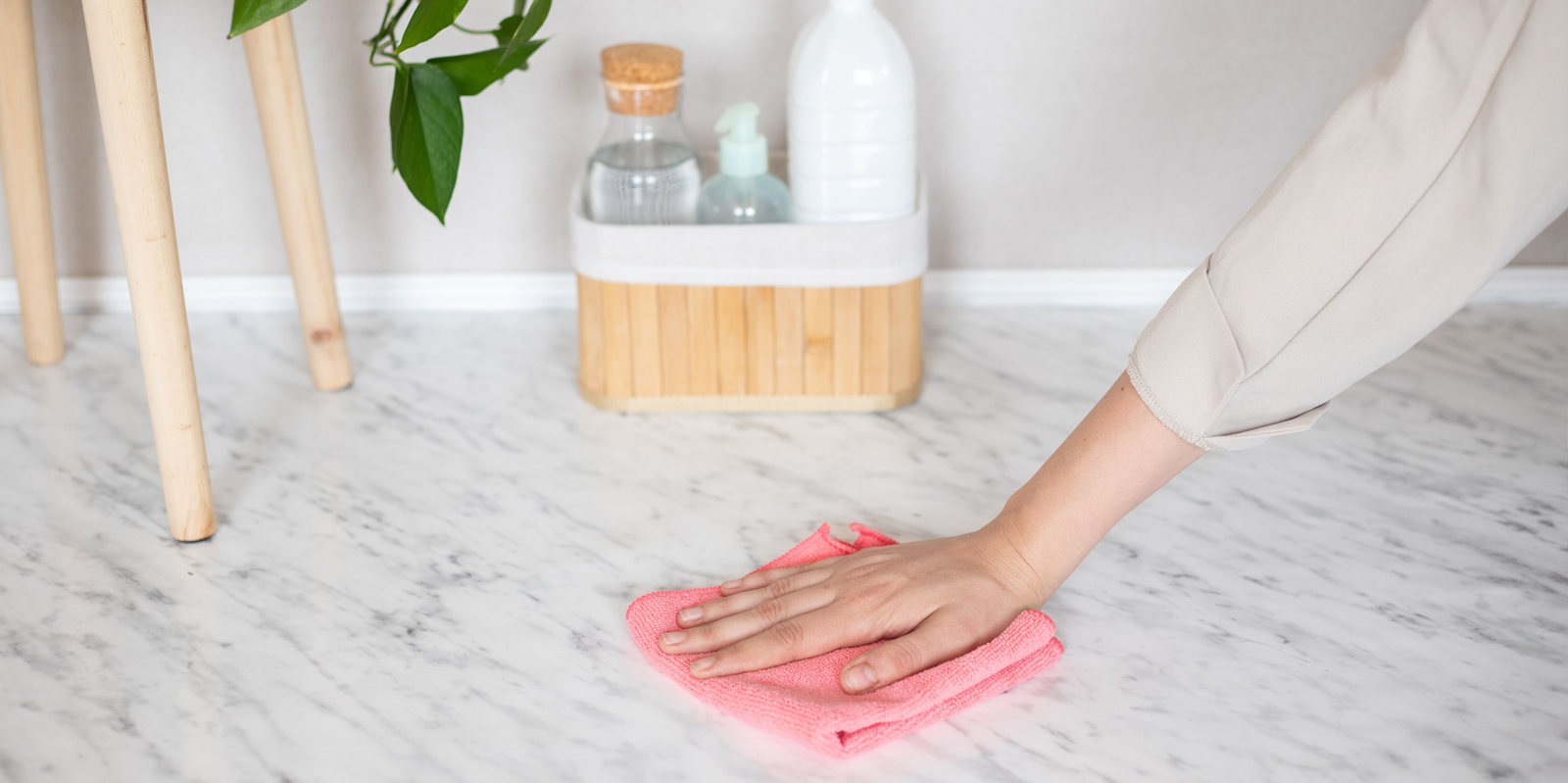
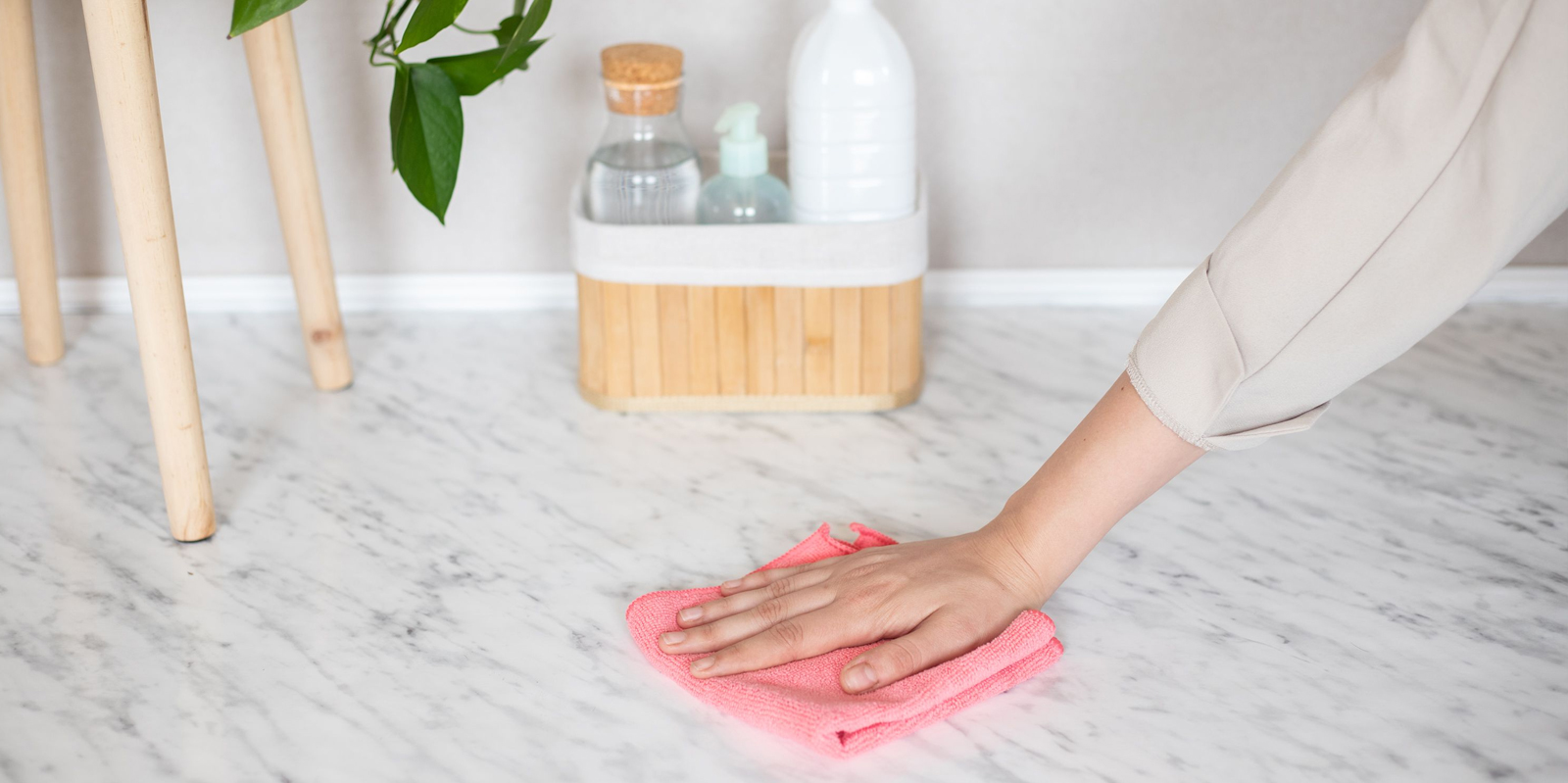
For your kitchen slabs, a quick wipe with warm water and a soft microfiber cloth is all you need. When it comes to floors, using a dry dust mop helps clear away the tiny bits of grit that cause scratches over time. Just dry everything after, so water spots don’t form.
2. Your Weekly Cleaning Schedule
Once a week, try using a pH-neutral stone cleaner to remove the oils and stains that plain water might leave behind. Check the grout lines in your bathroom to make sure they’re in good shape. This prevents moisture from getting trapped.
3. Your Monthly Cleaning Schedule
Doing a quick monthly check helps you catch small issues before they grow. Keep an eye on your marble. If it looks dull or water doesn’t stay in drops, it may need a little extra care. If water goes in quickly, it’s time to apply sealer again to keep it protected.
Do’s and Don’ts When Cleaning Marble
| Do’s |
Don’ts |
| Use warm water and mild soap | Don’t use vinegar or lemon-based cleaners |
| Soak up spills immediately | Wipe spills (this spreads the liquid) |
| Use coasters and placemats | Don’t place hot pots directly on the stone |
| Use soft microfibre cloths | Don’t use abrasive scouring pads or steel wool |
| Use a pH-neutral cleaner | Don’t use "all-purpose" bathroom sprays |
Warning: Do Not Use Vinegar or Acid
Most people do not realise that common "natural" cleaners like vinegar, cleaning acids or lemon juice are actually the biggest enemies of stone. These liquids damage the surface and remove its shine, leaving dull marks that don’t go away. Always opt for a pH-neutral cleaner to keep the polish shiny.
Marble Maintenance Tips for Different Areas
Every part of the home uses stones differently, so adjusting the care routine based on the area makes sense.
Patio and Alfresco- Cleaning outdoor surfaces is challenging due to the unpredictable weather.
What to do?
Using a high-quality sealer specifically designed for outdoor use helps the stone to shine year-round. Sweeping regularly prevents natural debris from breaking down on the surface.
Kitchen- The kitchen is the heart of the home, but it is also where the most acids are available.
What to do?
Always use a cutting board instead of cutting directly on the stone. If cooking with oils or vibrant spices like turmeric, keep a damp cloth nearby to catch any stray splashes instantly.
Bathroom Marble- Managing humidity is the main goal in a bathroom. Soap scum can build up over time and damage the beauty of the Marble.
What to do?
Using a squeegee on shower walls after each use is a simple habit that saves hours of cleaning marble floors in the bathroom later. Ensuring the room stays well-ventilated helps the stone dry out between uses.
Statement Walls- Stone used on walls or fireplace surrounds usually stays very clean because it isn't walked on or used for food prep.
What to do?
A light dusting with a feather duster or a soft cloth once a month keeps them in the best condition.
Conclusion
In Australia, cleaning natural stone doesn't have to be a hectic chore. Focus on easy habits like using coasters and wiping up spills right away rather than stressing over every bit of dust. When you understand your stone and keep your marble tile maintenance routine gentle, your home stays both elegant and comfortable. After all, these surfaces are meant to stay there for years. These small steps will help Marble age beautifully and stay a part of your home’s story for years to come.
FAQs on Marble Cleaning-
- What to use when cleaning marble?
- Warm water and a soft microfiber cloth for daily dust.
- A few drops of a pH-neutral stone cleaner.
- A dry towel to wipe it down afterwards (this prevents those annoying water spots).
- What NOT to use when cleaning marble?
- Why using a Proper Sealer is Important?
- Stops Rot: Blocks moisture from causing mould or cracks.
- Prevents Fading: Protects against harsh UV rays.
- Repels Stains: Keeps spills and dirt from soaking in.
- Saves Money: Makes your furniture or stone last years longer.
Stick to the basics so you don't wear down the stone:
Marble is sensitive to common household cleaners. You must keep them away from anything "acidic" because it will actually leave dull, cloudy marks that you can't just wipe off.
The No-Go List: Vinegar, lemon juice, random soaps and bleach
The No-Go Tools: Steel wool or green scrubby sponges
Using a proper sealer is key because it:
*Disclaimer: All information and advice given above in the blog are to the best of our knowledge. Please reconfirm at your end before execution.